Our Blog

Home   »   Archive by category "Women Stories" (Page 3)

Ramona | Guatemala

Ramona | Guatemala

Ramona Lucia from Guatemala

“Although I grew up with many limitations, I did not limit myself and always looked for a way to get ahead.”

Ramona Lucia, 23, lives with her family in Chiyax, a small village, 45 minutes from the city of Totonicapán. The local Maya dialect is K’iche’. Ramona was taught to embroider by her mother, Cipriana, who is also a member of the Multicolores’ Embroidery group, which is supported by a WE grant.

Throughout her life Ramona has dared to do things without fear to make her dreams come true. One such dream was to finish High School. This meant taking a job, at 12 years old, so that she could pay for transportation, food and school supplies when it looked like her parents’ financial resources would prevent her from going to school. Juggling work and school often meant that she had to do her homework well into the night. Ramona describes herself as a person with a lot of creativity, positivity, and perseverance to achieve her goals.

Another goal took shape in 2022 when the embroidery group had the opportunity to visit the home of a private collector and view the embroidered works of Antonio Ramirez Sosof, now deceased. The works so inspired Ramona that she resigned from her job in a shoe factory and dedicated herself to her career as an embroidery artist. Impressed with the collection, she stated that “one day I want people to collect my work like they have collected Don Antonio’s.”

Ramona’s abundant enthusiasm and willingness to learn has not gone unnoticed. She is currently working with Multicolores, assisting the Creative Director in the production area, putting into practice many of the new skills she has gained: quality control, shipping and inventory management, which she learned during her ArtWorks internship with Multicolores in 2022. Ramona is also learning English. Of working with Ramona, the Creative Director shares, “it’s nice to see how Ramona processes information; one can see her eyes light up generating more ideas and getting ready for action. She is very observant and wants to replicate the good she sees in others.”

An important and recurring theme in Ramona’s work is loss of culture and lack of awareness of cultural stories. She forms part of a movement of artists who are narrating and illuminating this theme globally. As an artist, Ramona uses incongruous imagery in her artwork, combining images that would not exist in reality, in order to evoke an emotion or sentiment. This can be seen in the story cloth below entitled, El Baile del Venado (The Dance of the Deer).

As a member of Multicolores, Ramona is proud to work with a group of talented and creative women who share ideas, support each other, and find joy in collective work. She is proud to support herself and her family through her work. Over time, Ramona has improved her design skills, particularly her drawing skills, she has learned how to convey technical knowledge to other women in her group, and she has achieved many of her goals. Her current goal is to continue saving so that she can install a drainage system in her family’s home. She also wants to continue learning English and learn more about clothing design. Ramona likes a challenge, and she likes to challenge herself. She is ready to take on the world!

“The Dance of the Deer is one of our most celebrated traditions, a folkloric rain dance, to the tune of the maracas and marimba. At the center of the dance is a person dressed as a deer, wearing a painted mask and a special ceremonial cloak.” – Ramona

El Baile del Venado (The Dance of the Deer) by Ramona Lucia Tzunún García


Ana & Marcela | Mexico

Ana & Marcela | Mexico

With WE support, Via has formed solidarity groups for women experiencing poverty, immigration challenges, deportation from the US, trafficking, and other traumas. The women are supported holistically in their well-being and empowerment and provided resources, training, microloans, and coaching for their small business endeavors as paths to financial independence and security. Via has established 3 main solidarity groups – ESTIMA, SantaFe, and Ve’e Tu’un Xavi. WE supports the women taking part in all groups.

Meet Ana Marcela, ESTIMA Group Participant:
WE funding supports empowered women like Ana Marcela
, who had been depressed and recovering from trauma in her past. Read her letter below:

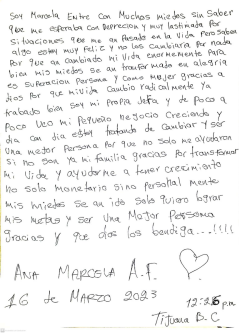
Ana Marcela, 16 March 2023
I am Ana Marcela and, among many fears, I did not know that I suffered from depression, very hurt  by situations in my past life but know that I am very happy and I would not change those things  because I have made enormous changes in my life for the better and those fears have  transformed into happiness and an improved person and I thank God because my life has  changed radically for the better. I now work and am my own boss and little by little I see my  small business growing and day by day I am trying to change and be a better person because  you have not just helped me but my whole family, thank you for transforming my life and  helping me grow, not just monetarily but as a person, my fears have left, I only want to achieve  my goals and be a better person. Thank you and may God bless you.  

Meet Marcela, Via Migrante Colonia Santa Fe Group Participant:
WE funding supports empowered women like Marcela
, whose community-level support and group process has played a vital role in fostering her self-esteem and self-reliance, empowering her towards a thriving future. 

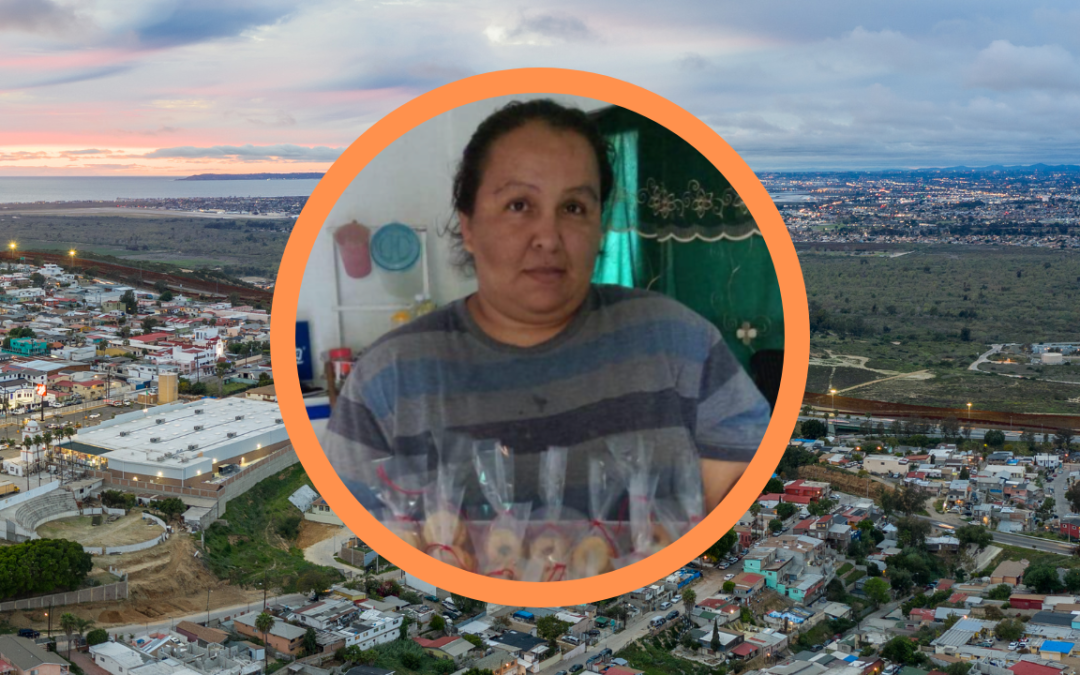
Ana Marcela’s inspiring journey unfolds as the sole supporter of her family, with both her mother and daughter facing disabilities. Through a life-changing Solidarity Group formed by Via program and funded by WE, she discovered the necessary tools to believe in herself, boosting her self-esteem and igniting a newfound passion for sales. From food and clothing to a small in-home store, Ana Marcela’s entrepreneurial spirit flourished, transforming her from an isolated and apathetic individual into an active participant seizing opportunities for her future. Her growth is evident as her group changed its name from “First Ones” to “The Invincibles,” a testament to their strength and determination.

The Via Migrante Colonia Santa Fe group originated with the Madres Deportadas (Deported Mothers) group, but soon expanded as more women from the community expressed interest. Despite facing challenges during the pandemic, their dedication remained steadfast. Two nutrition/health programs were successfully provided, with a graduation scheduled for December. Although the group slightly diminished in size due to some women returning to work, all ten members continue to stay engaged. The community-level support and group process have played a vital role in fostering self-esteem and self-reliance among the participants, leading them towards thriving futures.

Meeting weekly, the group’s confidence continues to grow. Initially gathering at the church, their unity and trust in each other led them to rotate the meetings in their homes, symbolizing their strong bond. Graduating in December will not mark the end of their journey; they are determined to welcome new participants in January. Moreover, two group members aspire to become Promotoras, furthering their impact as outreach workers. Despite starting during difficult times, their resilience and unity shine brightly, exemplifying the power of community and collective effort.

About Via International:

Families in Tijuana continued to face unexpected challenges and changes in the aftermath of COVID-19. The trauma experienced during the pandemic has had ripple effects for mothers and children, as well as for single women, who experienced isolation and struggled to make their way with or without children in their care. With WE support, Via has formed solidarity groups for women experiencing poverty, immigration challenges, deportation from the US, trafficking, and other traumas. The women are supported holistically in their well-being and empowerment and provided resources, training, microloans, and coaching for their small business endeavors as paths to financial independence and security.

Elie | Haiti

Elie | Haiti

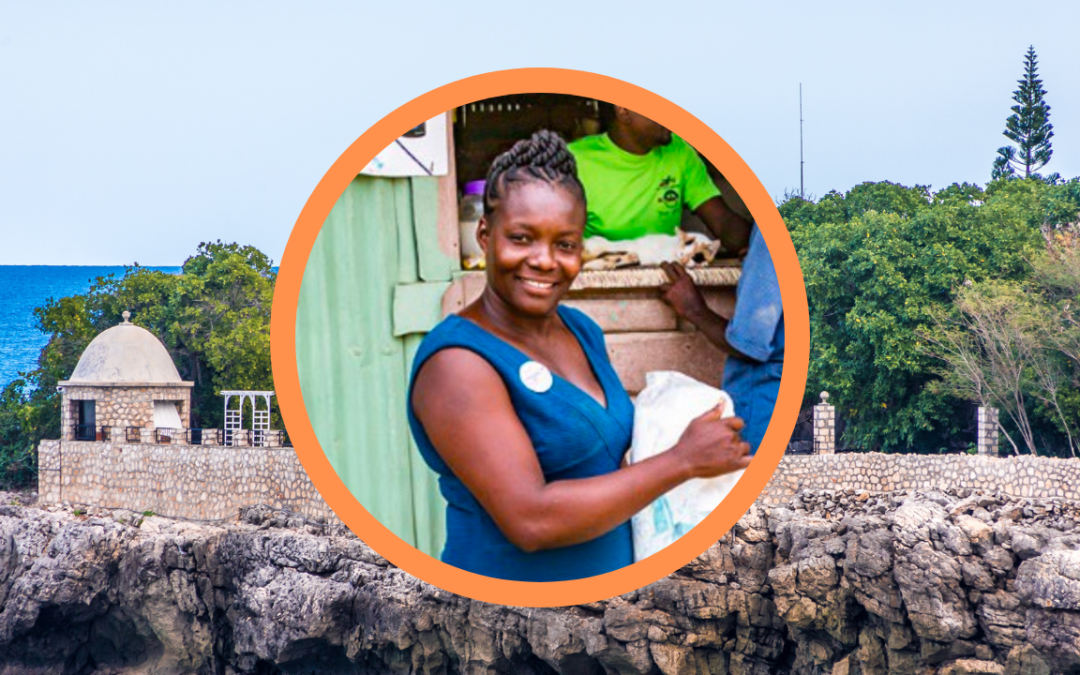
Elie S., a resident of Port-Margot in Haiti, is a devoted mother of four – three boys and a girl. Three of her children are in school, while the youngest is still an infant.

Elie has been associated with Fonkoze, a WE supported health program, for a few years now. She started with a loan of 3,000 HTG (~$22) and has grown her credit to 100,000 HTG ($733). Four years ago, she became a Community Health Entrepreneur (CHE) and eagerly joined the Boutik Sante program when it launched in Port-Margot. Even during her pregnancy, she actively promoted and generated interest in Boutik Sante within her community.

Before Fonkoze, Elie used to sell clothing and shoes as a street vendor, and later dishes and food. Being a part of Fonkoze relieved her from walking the streets to sell her items, resulting in higher income. She appreciates the quality and competitive pricing of Boutik Sante products, which saves her from traveling long distances to procure products to sell.

Elie’s involvement with Fonkoze goes beyond being a CHE. She is also a member of Fonkoze’s General Assembly, which empowers women with leadership skills and gives clients a voice in Fonkoze’s work. She values this position as it allows her to actively contribute to her community. Additionally, Elie has benefited from various trainings offered by Fonkoze through the AKSYON program, which aimed to reduce malnutrition in rural Haiti and ran from 2016 to 2021.

Her dream is to see her children grow up healthy and continue to enjoy their education. As a Center chief, Elie is dedicated to spreading awareness about Fonkoze and encouraging others in her community to join the organization.

About Fonkoze:

Nearly half of Haiti’s population is experiencing acute hunger due to a record-breaking food shortage triggered by drought, global shortages, rising gas prices, inflation, escalating gang violence, and natural disasters. WE contributes to Fonkoze’s vision working toward a Haiti where people, standing together, have pulled themselves out of poverty. WE supports Fonkoze’s award-winning health program, Boutik Sante, with funding for training and the purchase of supplies. Women microfinance clients are able to become Community Health Entrepreneurs (CHEs) through this program and conduct basic health screenings and education sessions in their communities and sell health products for additional income.

Orbe | Honduras

Orbe | Honduras

In the last quarter of 2022, Adelante, a WE partner since 2007, conducted a comprehensive needs assessment and risk analysis to determine the feasibility of supporting more underserved communities in Honduras. As a result, they have identified 3-4 regions they plan to serve in 2023 and 2024 – our renewed grant will support this endeavor.

Orbe, a remarkable entrepreneur who owns a thriving pulperia in Honduras has benefited greatly from the WE grant. Starting her business in 2018, she took five loans over the past five years, investing in supplies, kitchen appliances, and refurbishing the place. As a single mom, Orbe is determined to provide her daughters with a better life and to show them the rewards of hard work and determination.

During the pandemic, Orbe faced challenges with restricted operating hours, affecting her sales. However, with her daughters’ help as they grew older, her business improved. Offering delicious treats like savory baleadas, pastelitos de carne, desayunos, almuerzos, sopas, refrescos, and topogigios (sweet frozen popsicles), Orbe’s pulperia has become a popular spot. The Adelante board of directors paid her a visit and witnessed her pride in the enterprise’s success, a result of Adelante’s microloans that allowed her to expand her offerings.

Orbe’s inspiring story reflects the impact of microloans made possible by generous supporters like Women’s Empowerment International. Their ongoing assistance makes a meaningful difference in the lives of countless women and their families, empowering them to pursue their dreams and build prosperous futures.

About Adelante:

Honduras continues to be the poorest country in Central America, with over 70% of the population living in poverty. Thanks to WE, Adelante has been able to advance their mission to empower women in Honduras to achieve economic self-sufficiency. WE funding contributes to their microfinance loan pool for women starting and growing their businesses, along with trainings and program expansion.

Isela | San Diego

Isela | San Diego

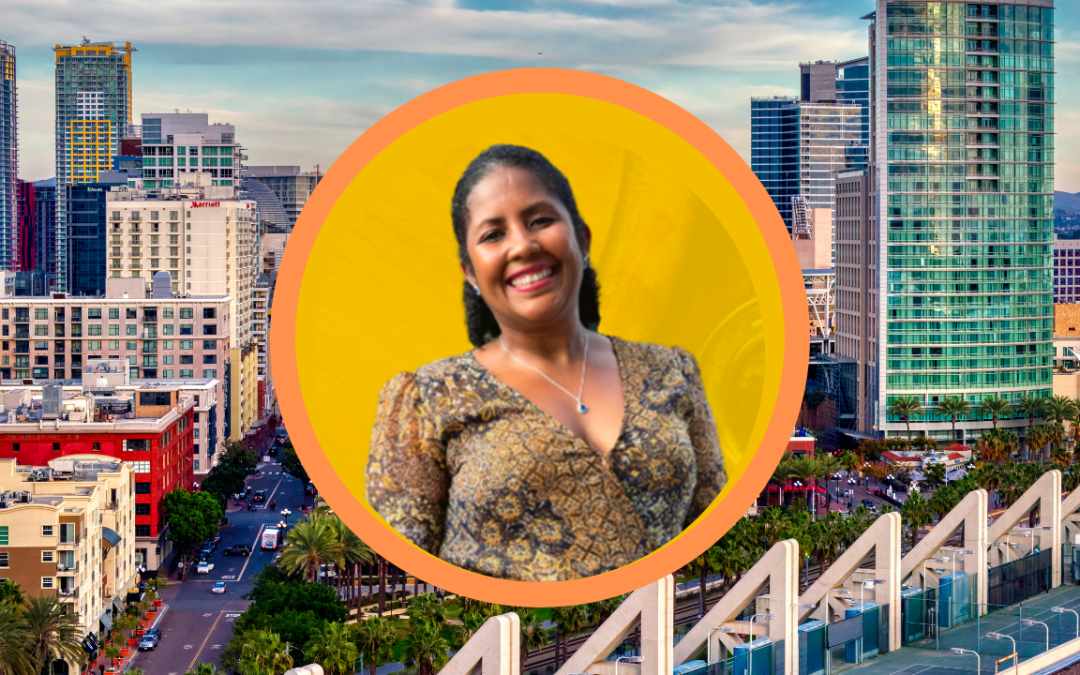
Isela is a professional chef, entrepreneur, wife, and mother of three beautiful daughters. She has over 20 years of experience in the food and business industries in Colombia and the U.S. Isela came to the U.S. as a political asylee who fled her home in Cartagena due to the persecution by the government for her activism defending Black and Afro-descendant communities of Colombia. Isela was introduced to IRC resettlement services in February 2019 through the Survivors of the Torture program. 

Once Isela was settled and ready to start her business, she was referred to IRC’s Small Business Development Center and the WE STAR Program, where she received one-on-one business counseling services. She was able to establish her business and access a $15,000 business loan to buy a food truck for her business. Isela sells at local farmers’ markets, supplies to local specialty grocers, and caters for special events. The company is now investing in a food trailer to develop a restaurant chain and become a staple for Colombian food.

About IRC San Diego:

IRC San Diego’s “WE STAR” Program recognizes entrepreneurship as a viable option for low-income, immigrant, and refugee women to achieve economic mobility and lift themselves out of poverty. Many of these women face obstacles to financial stability, including a lack of: access to linguistically- and culturally-appropriate services, formal education, transportation, access to financial capital, and familiarity with business customs and regulations in the US. With WE’s support, barriers are reduced for these women to open and operate a successful small business through training and workshops, 1:1 business counseling, business licensing assistance, access to microloans, and assistance with marketing and bookkeeping, as well as social and emotional wellness support.

Georgia | Uganda

Georgia | Uganda

Meet Georgia K., a resilient 58-year-old widow from Burandami village in Uganda. She is the caregiver of her four grandchildren, aged between 7 months and 10 years, as her daughter left them to search for a job but then never returned. Despite facing adversity, Georgia found hope through a loan of 500,000UGX (~$139) from Nyaka’s Grandmother Program, supported by WE funds.

With this loan, Georgia invested in her long-cherished dream of starting a goat-keeping project. The goat she bought gave birth to twins twice, rapidly increasing her goat herd to five within a year. Georgia sold three goats and purchased a calf, which has grown into a healthy cow. The cow also gave birth to a calf, adding to her growing livestock.

Georgia’s ingenuity didn’t stop there. She strategically uses goat manure to enrich her vegetable garden and banana plantation, ensuring a steady supply of nutritious food for herself and her grandchildren. Moreover, she enjoys a regular income from milk sales, providing her grandchildren with fresh milk.

Thanks to the support of WE funds, Georgia’s standard of living has significantly improved, earning her admiration and respect within her community. With determination and hard work, she repaid her loan from the income generated by her milk sales and banana plantation.

Today, Georgia’s assets include five goats valued at 1,000,000UGX (~$278) and two cows worth 2,700,000UGX (~$750). Grateful to Nyaka and WE, she proclaims, “Because of the loan I received, I am able to provide for my grandchildren.”

Georgia is an active member of the Kanungu Southern Ward Granny Group, soon to graduate from receiving revolving funds from Nyaka, marking another milestone in her inspiring journey of empowerment.


About Nyaka:


Uganda continues to face challenges such as a fragile economy affected by the Ebola outbreak, violence, and harsh weather conditions, which also affected agriculture and food access. Nyaka works with communities to nurture and protect children, so they can learn, grow, and thrive. WE supports its Grandmother program, which assists in caregiving, subverting sexual-based violence, and helping the grannies increase their earnings through microloans and investments. With WE support, the number of grandmothers with access to microfinancing, trainings, and support increases each year. These grannies have increased their household income and the economic wellbeing of their grandchildren, kept the children in school, and increased their own financial literacy. For every $40 invested into a grandmother-led household, there is a 285% return on investment within 36 months.