Site visits are a key way WE stays connected with each of its funded partners. Over the years, we have visited many of them, including those in San Diego County (of course!), Uganda, Honduras, and Mexico. While we haven’t been able to travel to any of our partners over the past two years, we look forward to an upcoming trip this month to our partner Via International in Tijuana, Mexico.
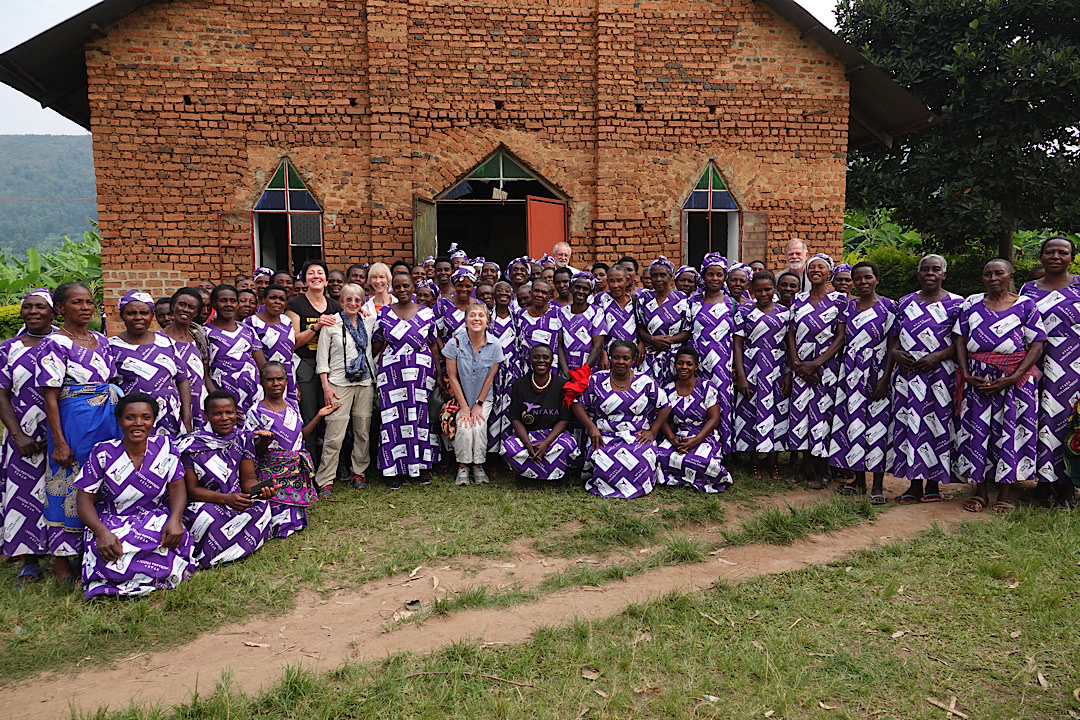
Site visits have made a lasting impression on our donors and volunteers through the unique opportunity to not only talk with partner staff, but visit many of the women supported by WE funding. Volunteer Partner Liaisons, Jeannette De Wyze and Steve Wolf, helped to coordinate a memorable visit to WE Partner, Nyaka, in Uganda. Jeannette documented the experience in her personal travel blog with beautiful photos from the trip.
Here is a short snippet from their blog post:
“One of the groups we visited has developed a robust business making handicrafts and selling them to the foreigners who come for the gorilla tracking.
Progress that was already starting to be evident three years ago has continued and seems to be accelerating.
For example, the first one-year loan ever granted (back around 2007) to one of the two groups we visited Saturday was for 200,000 Ugandan shillings — about $75. The group then made tiny loans — the equivalent of $5 to $10 — to individual members. Each woman would have the money for three months, then she would have to pay it back, along with about 15% interest. With so little money, a granny might only be able to buy a chicken or two. But she could hatch some of the eggs, sell others, and come away with a bit of extra cash — money that more often than not she would use to pay her grandkids’ school fees.
Over the last six years, as WE has donated money raised in San Diego, the Nyakans’ central revolving fund has grown from just $7,000 to almost $250,000 (including profits from the interest on the group loans and about $175,000 from WE). That’s meant granny groups have been able to receive bigger and bigger annual loans. The group that began with a $75 loan now has a loan of more than $4000.”
This #EarthDay we are reflecting on those who are most affected by climate change.
Climate change disproportionately affects women and girls, especially those living in poverty.
We believe climate action is a key component to fighting poverty.
Research shows that women are more likely to be impacted by climate change, and they are our best advocates to fight it. As stated in a recent article by One Earth, “Studies have found that 80% of people displaced by climate change are women.” The article outlines the powerful ways women can affect change when empowered with resources, access, financial inclusion, and leadership opportunities.
UN Women has shined a light on the important link between climate change, sustainability, and gender equality for this year’s International Women’s Day theme and its recent session of the Commission on the Status of Women.
On the sidelines of the 66th Session of the Commission on the Status of Women, African women leaders came together to discuss the impact of climate change on women in Africa and the leadership roles that women are playing in mitigating the negative impacts.
“Climate action must include investing in women activists, human rights defenders, and civil society organizations,” UN Secretary-General Antonio Guterres said in a virtual town hall with women representing a range of civil society organizations during the 66th session of the Commission on the Status of Women (CSW66).
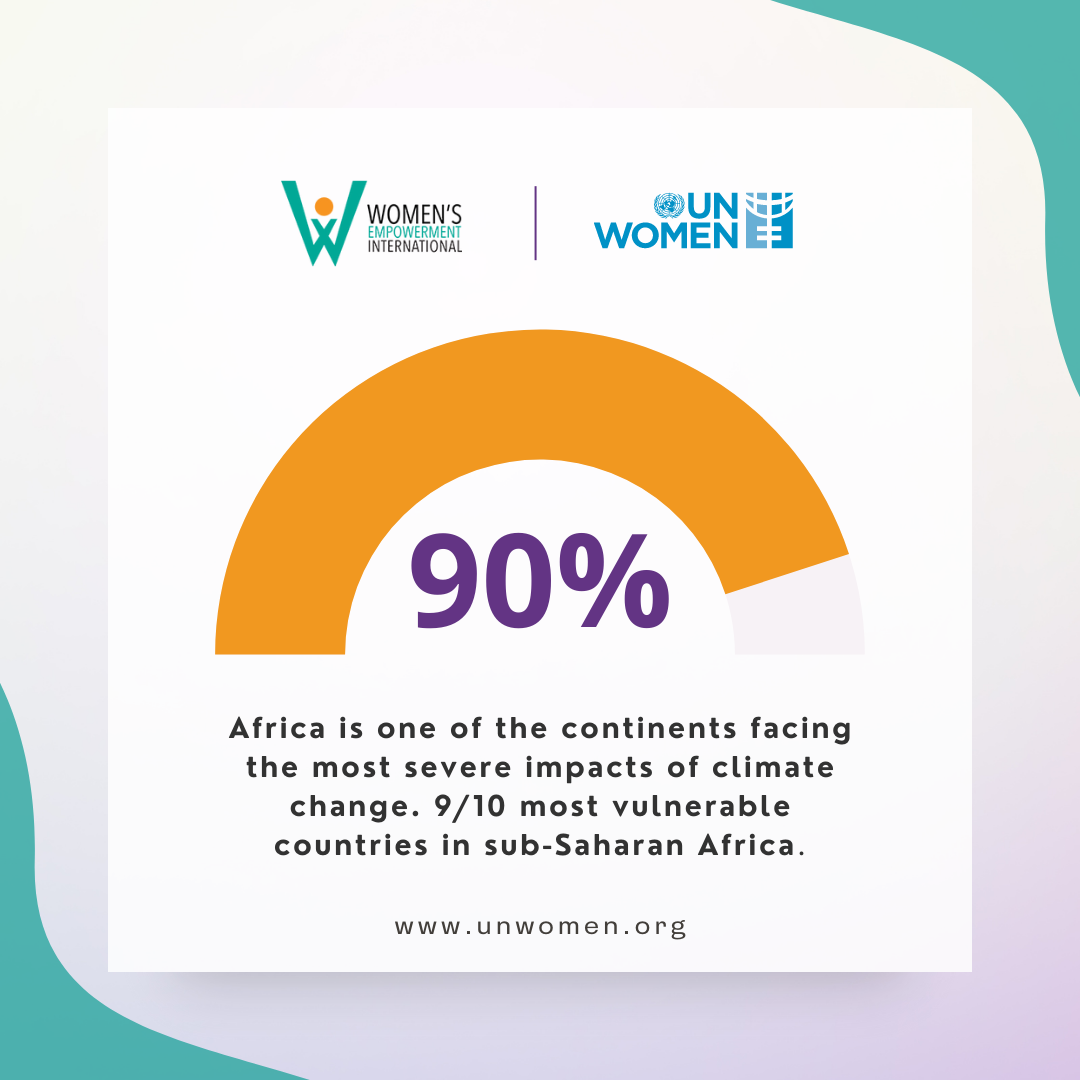
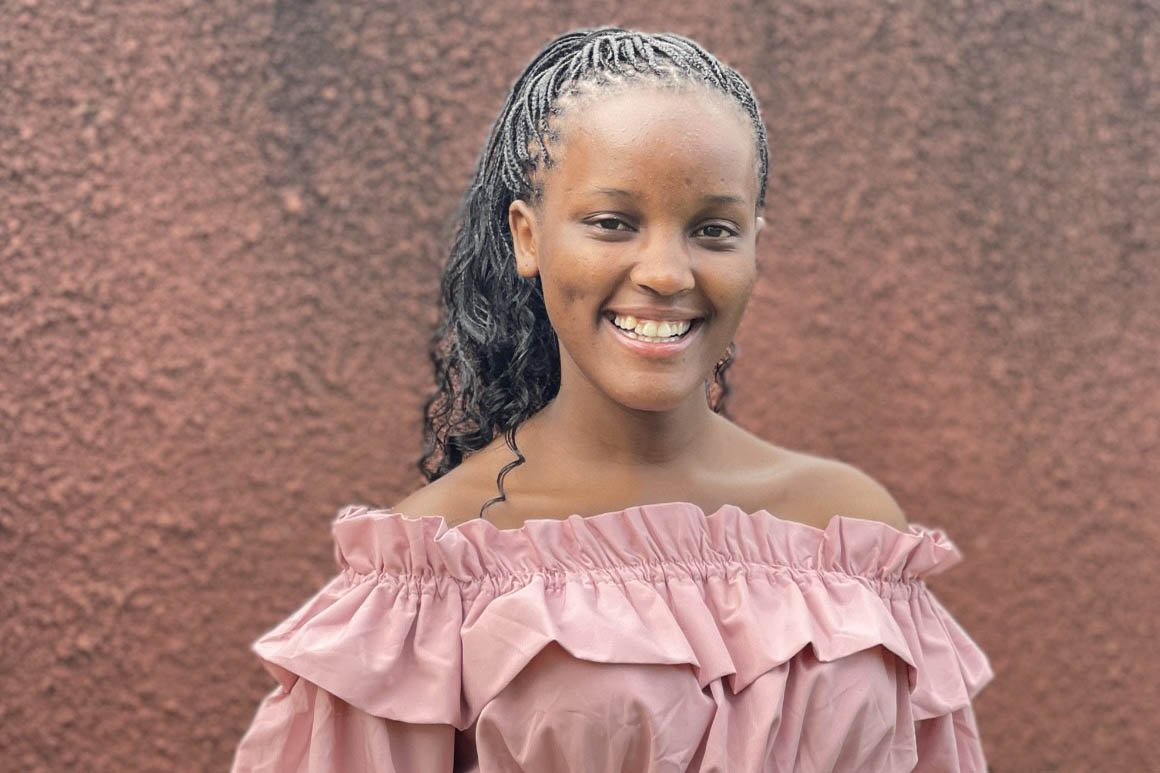
Many of the women we serve rely on the health of the land for their livelihoods and wellbeing. We applaud the women and girls around the world leading the charge for a healthier future and sustainable environment, like Vanessa Nakate in Uganda, where WE Partner, Nyaka, is based. Uganda is one of the top 10 most vulnerable countries to climate change, but Vanessa is working to change that and move gender equality forward.
In order to successfully tackle climate change, everyone needs to be a part of the conversation.
“In spite of their vulnerabilities and the many challenges, it is clear to see that the critical role women can play as powerful change agents to address climate at an alarming skill is minimized,” said Vice-President of Republic of Liberia, Jewel Taylor. “As key actors in sustaining families, building community resilience and responding to climate-related disasters, women tend to make decisions for the utilizations of core resources in the interests of our families, our communities and our children.”
Marlene is a single mother who works hard to provide for her six children in the Goyay area of Haiti’s Central Plateau, where rural families like hers are all too often overlooked and sometimes forgotten. Marlene is determined not to fall through the cracks of society. And she is succeeding.
Previously selling coal in Port-au-Prince, Marlene left that business and the city behind to start a new business outside of the capital due to ongoing unrest and rising crime. Shortly after, she joined the Solidarity Program of WE Partner, Fonkoze, and was trained to be a Community Health Entrepreneur (CHE). She now proudly owns her own boutik sante–a community health store–and is able to help her local community by providing access to health products, services, and education. Her drive and success even earned her the position of Center Chief, a peer-elected leader of a Fonkoze-empowered Solidarity Center. Five to six Solidarity Groups from a common geographical area join to form a Solidarity Center of 25-30 women. Centers meet monthly to repay their loans, build community and participate in education and training activities.
Marleen says she trusts Fonkoze and is always encouraging other women to join. Proud of her growing business, she enjoys selecting high-quality products and is happy that a Fonkoze procurement site is located close to her home. “I don’t have to spend money and time on transportation to purchase items to sell in my store,” she says.
Marlene has been a Fonkoze client for 15 years. Since beginning her partnership with Fonkoze, she has made a tremendous amount of progress, both personally and professionally. Her hard work and determination have also enabled all her children to stay in school. She says, “Thanks to the loans and the business skills training I’ve received from Fonkoze, I have been able to grow my business, purchase my own land, and I plan on building a home soon!”
Meet Peace from Uganda Peace, 57, lives in Katojo village, in the western Uganda Kanungu district. She lives with her two grandchildren, Tukamushaba Sheilah (10) and Nahurira Violah (7), who she became caregiver for after her daughter passed away.
Peace participates in a WE-funded microfinance program with our partner, Nyaka. She was lucky to have acquired tailoring skills, and she borrowed 500,000UGX (Ugandan Shillings; approximately $139) from her granny group to buy a sewing machine. The money was not enough, so she sold her piglets to pay for the balance.
Peace is diabetic, so some of her profits from her tailored clothes must go to her medical bills instead of back into her business, thus slowing the growth of her business to the heights it could potentially reach. However, she is always able to make payments on the loan in time. She is well known in her community for her expertise in tailoring, and schools from nearby engage her in making uniforms. Peace has also continued to rear pigs, which adds to her income and helps pay for fees so she can see her grandchildren through school. She says her elder grandchild dreams of becoming a doctor and the youngest dreams of becoming a teacher. She is optimistic that with her participation in the microfinance program, their dreams will be fulfilled.
SAN DIEGO COUNTY, CA – The Board and Staff leadership team of Women’s Empowerment International (WE) are pleased to announce that Sarah Adams has been appointed as WE’s new Executive Director. WE, a San Diego-based nonprofit, funds projects locally and internationally that provide women economic opportunities, microloans, training, and other tools to disrupt the cycle of poverty and strengthen their families and communities. Adams, a San Diego local, was selected after a nationwide search. WE was run entirely by volunteer board and committee members until 2016 when it was able to bring on its first executive director. Since then, the organization has grown to two staff positions and continues with a strong, passionate group of board members, committee members, and other committed volunteers.
An accomplished leader, Adams has more than 20 years’ experience in the nonprofit sector and has a proven track record in building strategic partnerships, organization capacity building, fundraising, volunteer engagement, and program development. She has served in staff leadership positions, on boards, and as a consultant/trainer for organizations of all sizes, from small, grassroots nonprofits to large, national organizations. At her most recent position with Operation Homefront, she served as a senior regional director for field programs, overseeing development, programs, events, and operations in a five-state area. Adams received her Master’s Degree in Nonprofit Leadership and Management from the University of San Diego.
WE President, Debbie McGraw, says, “Sarah brings an important set of skills to WE including volunteer organizing, program development, and capacity building that are crucial to our campaign to reach more economically vulnerable women through innovative and committed programs both locally and internationally. Finding and supporting programs that are successfully providing women the tools to work their way out of poverty and build up their families and communities requires the kind of committed leadership and action that Sarah has shown throughout her career.”
Adams will lead the organization’s strategic plan to increase funding for partner organizations by 60% over the next three years, grow its membership base and giving circles, and continue to build internal capacity and infrastructure. She will also work with the board on diversity, equity, and inclusion efforts for the organization.
“I have always been passionate about women and girls’ empowerment issues, amplifying women’s voices in the community, and providing tools for women to exercise their own leadership,” says Adams. “The impacts of the COVID-19 pandemic have disproportionately affected women’s economic well-being and opportunities around the world over the past two years. I am honored to join WE and all of its partners in this important work to support women and families at such a crucial time.”
Women’s Empowerment International (WE), a 501(c)(3) nonprofit organization, was founded in 2005 by a group of visionary women with an ambitious goal to disrupt the cycle of poverty for women around the world, especially those living in under-resourced, rural communities. With a mission to empower women with tools to work their way out of poverty, care for their families, and strengthen their communities, WE has provided nearly $2.1 million in funding for programs in eight countries, including the U.S. and Puerto Rico, Haiti, Honduras, Mexico, and Uganda. WE funds microloans, training, and practical, holistic support and is headquartered in San Diego, CA.
Congratulations to Nyaka for all of their accomplishments over the past 20 years. They recently shared the findings of their Monitoring and Evaluation team’s first Household Economic and Wellbeing survey looking at how Nyaka’s work has supported income generation and resilience amongst grandmother-led households in southwest Uganda.
The WE-funded microfinance program offers loans within granny groups to help pay for medical care, address other household needs, and provide seed capital to grandmother entrepreneurs who wish to start small income-generating businesses such as gardens, brick selling, or retail stores. The survey confirmed that these programs create true impact: the average daily income of Nyaka-grandmother households is $2.38, compared to $1.65 amongst non-Nyaka grandmothers in the same area. (The international poverty line is currently set at $1.90 a day.)
We are proud to share this announcement from WE Partner, Fonkoze. Knowing that financial inclusion is an important tool for poverty alleviation, the Luxembourg Ministry of Foreign and European Affairs launched the European Microfinance Award in 2005.]
The award program serves two parallel goals: rewarding excellence and collecting and disseminating the most relevant practices for replication by others. Fonkoze won the 2021 European Microfinance Award for “Inclusive Finance and Health Care” for its Boutik Santé work, which WE funding supports. There were 43 submissions from 32 countries.
The Lives We Touch: Eva Judith Martínez Rojas Farming Entrepreneur, Puerto Rico
Meet Eva Judith Martinez Rojas, a farming entrepreneur from Miraflores, Puerto Rico. Eva is a proud participant in Libera, WE’s entrepreneurship program partner, Proyecto Matria. Following her generations-long family tradition in agriculture, today Eva runs El Caminito, her farm and nursery. Together with her spouse Luis, Eva is developing a micro-agricultural enterprise where they plant cassava, papaya, bananas, celery and yautias and also house a nursery built with various recycled materials. This was supported by the initial contribution of seed capital from Proyecto Matria.
Eva’s sensitivity and collaborative spirit have enabled her to cultivate strong relationships in her community as she serves her neighbors. She is a true asset to her neighborhood and to this program that describes her as “a woman who fills every action with love.”
Eva’s passion for service to others equals her passion for her business. A true community leader, she participates in Casa Solidaria Matria, actively helping the community organization rebuild following Hurricane Maria.
Eva has also been a regular at the empowerment workshops and business training offered through the Libera business incubator. She has rediscovered her strength and integrated her family, business and community goals based on social responsibility. Women like Eva are an essential part of the Puerto Rican recovery and WE is honored to support her continued success!
Meet Bobbie: Workforce Development Trainee. Dreams for Change is a WE partner that serves as a lifeline and beacon of hope for San Diegans experiencing homelessness. Through their innovative workforce development program, Dreams Cuisine, women who are homeless or housing insecure are paid wages to train and work on food trucks while building their soft skills and gaining vital on-the-job experience. WE is thrilled to announce the renewal of our partnership with Dreams for Change and support an anticipated 23 women through the program in the year ahead. As low-income San Diegans face greater obstacles than ever, we are grateful to stand with them and empower women striving for better lives.
Kabaami Aisha is 66 years old and is from Rwemisisi cell, Kihihi town parish, Kihihi T/council,
Kanungu district. She lives with three grandchildren of her late son. These came to the grandmother’s home after the death of their father who had already separated with the wife. The mother’s whereabouts are not known. Aisha has been running a business of tailoring, but after joining Nyaka grandmother group and receiving training in financial literacy, she decided to start selling second hand clothes like bed sheets, towels, children clothes, skirts and dresses.
Aisha also realized that she was wasting part of her rented room where she only operated her sewing machine yet she could use it to sell soft drinks. Aisha is one of the lucky grandmothers who has benefited from WE funds worth 500,000UGX. She used the money to buy clothes and some soft drinks to add on her tailoring business. Aisha is also planning to start selling fabric since people come to her shop for tailoring services. Aisha is able to use her loan with confidence due to its low interest rates and no additional costs in acquiring it. She is able to repay her loan using the profits she gets after selling her clothes, repairing clothes and this has helped her to support her grandchildren.